Introduction
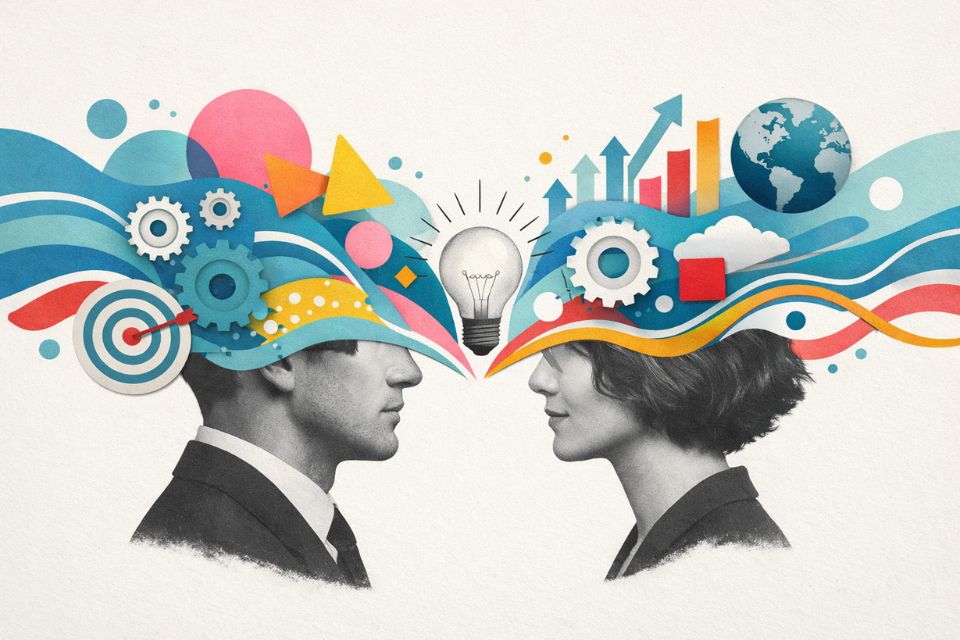
When we talk about diversity in teams, we often think of visible differences. However, the differences that determine innovation most significantly lie deeper: in how people perceive, think, assign meaning, and approach problems. In science, this is called deep-level diversity – differences in perspectives, knowledge structures, values, and thinking styles. Neurodiversity falls exactly within this category; it concerns cognitive variation in information processing and systems thinking.
What neurodivergent team members often bring:
- Unique pattern recognition
- Both detail-oriented and systems thinking
- Alternative problem definitions
- Perseverance and deep focus
- Unexpected associations

Creativity begins with difference, but ends with integration
Research shows that teams with diverse perspectives generate more original ideas and break through existing thought patterns. At the same time, this same diversity can make it more difficult to bring ideas together into one coherent result. The gain does not arise from diversity itself, but from what teams do with those differences: sharing, discussing, and integrating diverse insights. Variation in thinking styles stimulates learning, especially when an inclusive environment is present.
The mere act of bringing different thinkers together is not enough. The true value of deep-level diversity is only unlocked when team members actively request, discuss, and integrate each other’s unique information into the collective process.
Diversity is not a trait, but a process
Diversity never works in isolation from its context. Its effects are influenced by task complexity, leadership, and team climate. Diversity is not an ingredient that you simply add for an automatic result; it is a dynamic process driven by interaction. Especially with complex, creative tasks – the type of work modern organisations deal with daily – the relationship between diversity and performance becomes stronger.
Variation in thinking strategies expands the 'solution space'
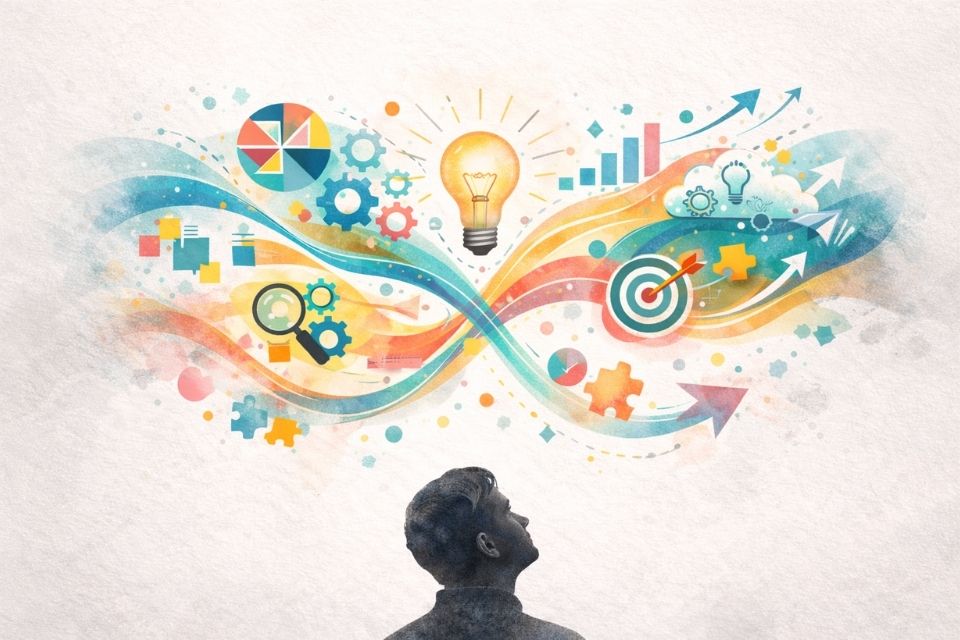
When group members use different search strategies, teams can find higher-quality solutions, leading to “strong synergy”. Instead of following one path, the group explores multiple routes simultaneously. Neurodiversity increases precisely this strategic variation: where one person sees patterns, another sees anomalies; where one abstracts, another concretises. This increases the chance that a team learns not only faster, but also smarter.
This increase in strategic variation is, however, fragile. Without a conscious focus on how these different perspectives are shared, valuable insights can be lost in the noise of the group. Leveraging neurodiversity therefore requires more than just the right people; it requires a structured dialogue in which every unique thought path is explored.
Psychological safety determines whether differences are utilised
Diversity provides cognitive wealth, but also friction. Therefore, psychological safety, the belief that it is safe to take interpersonal risks is a crucial prerequisite. In a safe environment, people feel free to ask questions, admit mistakes, and express doubts. For neurodiverse teams, this means that divergent thinking must not only be permitted but explicitly welcomed.

Productive friction instead of social friction
Successful teams learn to normalise “productive friction”: disagreements are part of quality, and ideas are allowed to clash as long as people do not. When teams investigate differences instead of avoiding them, they deepen their analysis. The goal is to utilise cognitive variation by explicitly gathering perspectives, sharing information in a structured way, and valuing divergent insights before consensus is reached.
When cognitive variation is combined with an inclusive climate, a larger ‘solution space’ is created. Teams that master this process not only increase their creative output but also make qualitatively better decisions by effectively eliminating blind spots.
Final thoughts
The paradox of diversity is clear: it is not a guarantee of success, but a potential. Without inclusion and safety, coordination costs can dominate, but under the right conditions, the benefits prevail. The question is not whether we have diversity, but whether we can utilise difference. Synergy arises not when we learn to think the same, but when we learn to think differently, together.
Together for a brain-friendly workplace!
The biggest changes often lie in the smallest adjustments. Deep-level diversity is a massive strength for any organisation, provided it is understood and facilitated. Have you gained insights from this article that you want to translate to your team or organisation? Let’s spark a conversation about how we can make your work environment more brain-friendly together.
Our Neurodiversity Training
We help leaders, HR professionals, and teams to work neuro-inclusively with clear scientific insights and directly applicable tools. Our training sessions are aimed at building inclusive, resilient, and innovative organisations.
For teams: Learn to utilise “productive friction” for better results.
For leaders: Discover how to drive the engine of collective intelligence.
For HR: Practical tools for neuro-inclusive recruitment and talent retention.
Ready for the next step? Curious which training best suits your challenges? View our full range or contact us directly for a bespoke proposal.
Recent and relevant sources
- • Harvey, S. (2013). Deep-level diversity and group creativity.
- • Jansen, A. E., & Searle, B. J. (2021). Surface vs. deep-level diversity review.
- • Larson, J. R. Jr. (2007). Deep diversity & synergy.
- • van Knippenberg (2024). Diversity synergy vs. bias mechanisms.
- • Qi et al. (2022). Cognitive diversity & information elaboration.
- • Gerlach et al. (2022). Psychological safety in diverse teams.
- • Diversity Project (2025). Cognitive diversity requires inclusion & safety.
- • Comprehensive meta-analysis diversity & performance (2025).